
L
Correctly pronouncing /l/ is very difficult for many non-native speakers. /l/ is commonly confused with/r/ or /w/. If you don’t have /l/ in your language, you will have to retrain your muscle memory. You must focus on proper placement for your tongue, lips, jaw and air flow.
Making /l/
- /l/ is made differently depending on where it is in the word.
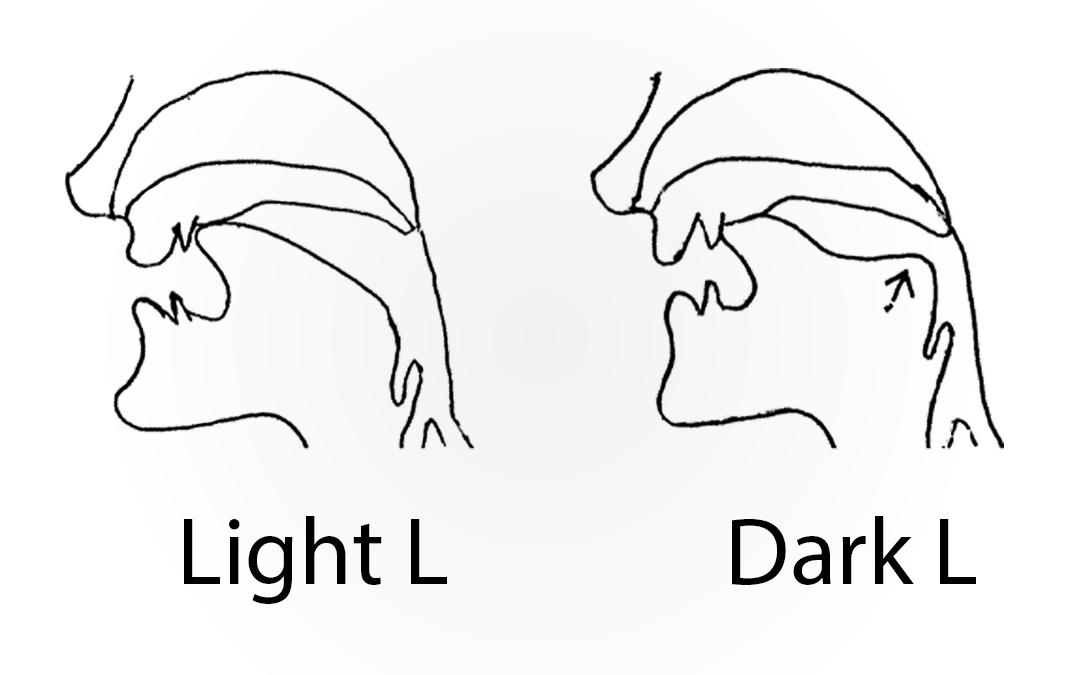
- Don’t move your jaw or lips when making /l/. Move only your tongue. Your tongue will have different places of articulation for Light L and Dark L.
Light L
- The /l/ at the beginning of a word. This is the easiest to pronounce.
- Light L is produced before a vowel. late, like, lamp, look
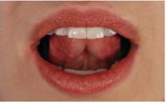
- The tip of tongue touches alveolar ridge.
- Light L is a flick of the tongue against the alveolar ridge. It has a la-la-la-la sound
- The back of the tongue remains low.
Dark L
- The /l/ at the end of the word. This is difficult to pronounce.
- Dark L is produced after a vowel (or schwa). call, school, tell, people
- The tip of tongue touches alveolar ridge, and stays there. It is not a flick, like Light L.
- Dark L has a “uh-l” sound.
- The back of the tongue is raised toward the soft palate.
Practice both Light and Dark L
Bring your focus to the difference in tongue placement.
Practice /l/ in the initial position.
- later
- love
- long
- leave
- left
- location
- lasagna
- lamp
- lawyer
- listening
Practice /l/ in the final position.
- people
- call
- feel
- individual
- pool
- unusual
- virtual
- until
- tell
Interested in reducing your accent? Contact us for a free assessment!
Slightly press the tip of your tongue on the top portion of your mouth. The position of the mouth is similar to the D and T sound, but is much softer.
L is made with the tip of the tongue. T and D are made with the blade of the tongue, slightly behind the tip. Place of articulation for all 3 sounds is the alveolar ridge. “softness” is not a consideration.